When a baby tooth is lost early, a space maintainer can hold room for the permanent tooth growing underneath. Our pediatric dentists look at which tooth was lost, your child's age and the developing permanent tooth, then explain whether to hold the space or watch it.
A space maintainer is planned around your child's own teeth. Here is how the process generally goes at our Stratford office.
We look at the space
The dentist looks at which tooth was lost, your child's age and the developing permanent tooth. You hear whether we recommend holding the space or watching it, and why.
The appliance is fitted and placed
If a spacer is the right choice, it is fitted to your child's teeth and placed. We explain each step first, and parents are welcome to stay in the room.
We check it as your child grows
The space maintainer is checked at follow-up visits. It is adjusted or removed when appropriate, usually once the permanent tooth begins to come in.
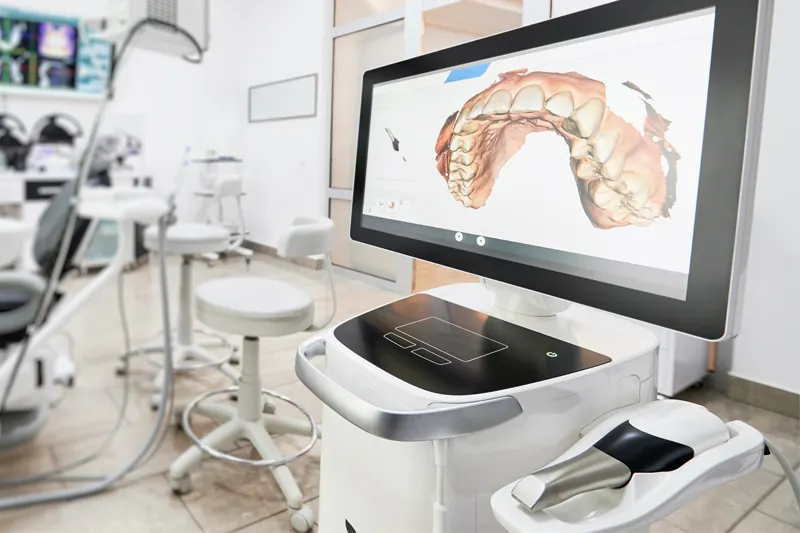
A digital scan shows the shape and position of teeth
In detail
Space maintainers for kids, explained.
A space maintainer is a small custom appliance that saves room for a permanent tooth after a baby tooth is lost early. Here is what it is, the kinds that exist, how one is put in, how to live with it and when it comes out.
What it does
Holds room for a permanent tooth
Most common reason
A baby molar lost early
Daily care
Skip sticky, chewy and hard foods
Comes out
Usually when the permanent tooth starts coming in
01
What is a space maintainer?
A space maintainer, often called a spacer, is a small appliance that keeps a gap open after a baby tooth is lost too soon. It stops the neighboring teeth from sliding into the empty spot, so the permanent tooth growing underneath is more likely to have room to come in.
A dental spacer for kids is passive, which means it does not push or pull on anything. Braces move teeth and a tooth-colored filling repairs one. A spacer only holds a place. Most are stainless steel, sized to the child's own teeth and cemented on.
Not every child needs one. A lost upper front baby tooth (an incisor) often does not call for a spacer, and neither does a gap where the permanent tooth is nearly through. If you are still weighing that question, our guide on whether a child needs a space maintainer walks through the decision. This page covers what getting one, and living with one, is like.
02
Types of space maintainers for kids
Space maintainers are either fixed, meaning cemented to the teeth, or removable, like a retainer. Fixed designs are generally the most common for children because they do not depend on a child remembering to wear them. These are the names used in pediatric dentistry, described here as general education:
Band and loop. A metal band circles the tooth next to the gap, and a wire loop stretches over the empty spot to touch the tooth on the far side. It holds the space of a single missing baby molar.
Crown and loop. The loop is the same, but it is joined to a stainless steel crown in place of a band. It is used when the tooth beside the gap needs a crown anyway.
Distal shoe. An anchor on the first baby molar carries a short metal blade that tucks below the gumline. It is meant to guide a first permanent molar that has not come in yet, and it is usually replaced with another design once that molar is in.
Lower lingual holding arch. A wire follows the inside curve of the lower teeth, from a band on one back molar to a band on the other. It can hold space on both sides at once, and it is generally placed after the lower permanent front teeth have come in.
Nance appliance. Two banded upper molars are linked by a wire that ends in a small acrylic button resting against the roof of the mouth.
Transpalatal arch. A plain wire runs straight across the palate from one banded upper molar to the other, with no button. It mainly keeps the molars from rotating, so it suits only certain situations.
Removable partial. This one looks like a retainer and clips on and off. Some carry replacement teeth. It only works while it is in the mouth, so it suits children who will wear it faithfully.
At Little Teeth, the dentist recommends a design only after looking at which tooth was lost, your child's age and the developing permanent tooth. Options may include an appliance for one missing tooth or one that holds space across several teeth.
Types of space maintainers compared
Type
Where it goes
Used when
Fixed or removable
Band and loop
One side, upper or lower back teeth
A single baby molar is missing
Fixed
Crown and loop
One side, upper or lower back teeth
One molar is missing and the tooth beside it needs a crown
Fixed
Distal shoe
One side, anchored on the first baby molar and reaching back under the gum
A second baby molar is lost before the first permanent molar is in
Fixed
Lower lingual holding arch
Both sides of the lower jaw, behind the front teeth
Lower baby molars are missing on both sides or more than one is gone, usually once the lower permanent front teeth are in
Fixed
Nance appliance
Both sides of the upper jaw, resting on the palate
Upper baby molars are missing on both sides
Fixed
Transpalatal arch
Both sides of the upper jaw, across the palate
Upper molars need to be kept from rotating, in selected cases
Fixed
Removable partial
Upper or lower, clipped to the teeth
Several teeth are missing and the child will wear it reliably
Removable
General comparison for parents. The dentist chooses a design, or recommends watching the space, after an exam and X-rays.
03
How is a space maintainer put in?
A fixed space maintainer is custom made and then cemented onto the teeth. In general dental practice, that often means one visit to fit and record the teeth and another to cement the finished appliance, though the number of visits varies. The dentist will tell you what to expect for your child. The general steps look like this:
Exam and X-ray. The dentist checks the gap, the teeth beside it and the bite. An X-ray shows how far along the permanent tooth is.
Sizing the band. A few band sizes are tried on the anchor tooth to find the one that hugs it. This can feel like a firm squeeze.
Recording the teeth. A mold or a digital scan captures the shape of the teeth.
Making the appliance. Using that record, the wire is bent to fit and attached to the chosen band.
Cementing. With the tooth dry, the cement-lined band is pushed down over it. Any cement that squeezes out is wiped off.
Fit check. Your child bites together while the dentist makes sure nothing rubs the gum or gets in the way of the bite.
If the back teeth sit very tightly together, small rubber separators may be placed for a short time first to make room for the band. Parents are welcome to stay with their child, and we use tell-show-do so your child knows what is coming.
04
Does getting a spacer hurt?
The play area at our Stratford office
For most children it is not painful. Fitting and cementing a band and loop or an arch often needs no numbing and no drilling. A child may feel pressure while the band is seated and notice the taste of the cement.
Some designs are different. A crown and loop means preparing a tooth for a crown, and a distal shoe is generally placed when the baby tooth is removed. Those are generally done with the area numbed. When numbing is needed at Little Teeth, we use a topical gel first and then local anesthetic, and we explain each step with tell-show-do.
Expect a snug or tender feeling around the banded tooth for the first day or two. Your child's tongue will be busy with the new wire, and an appliance across the palate can change how a few words sound at first. Call us if soreness is not settling. If your child is anxious about dental visits, tell us ahead of time. Laughing gas is available in our office when the dentist feels it would help.
05
How long does a space maintainer stay in?
A space maintainer generally stays in until the permanent tooth begins to come through the gum. For a tooth lost close to its normal time that may be only months. For a tooth lost very young it can be years. The permanent teeth that replace baby molars typically arrive around ages 10 to 12, though timing varies from child to child.
The appliance is not placed and forgotten. We check it at follow-up visits, which often line up with your child's regular checkups and cleanings. The dentist looks at the cement, the fit of the band, the gum under the wire and how close the permanent tooth is. As the mouth grows, a spacer may be adjusted or swapped for a different design.
Taking it off is usually quick and does not normally call for numbing. The dentist eases the band free and then polishes the tooth to remove any cement left behind.
06
Eating and cleaning with a space maintainer
Your child can eat most normal foods with a spacer. The main rule is to avoid anything sticky, chewy or hard, because those foods can pull a band loose or bend the wire.
Sticky and chewy foods. Gum, caramel, taffy, gummies and fruit snacks grab the band and tug on the cement. Leave them out.
Hard foods. Ice, hard candy, nuts and unpopped popcorn kernels can bend the wire. Slice raw apples and carrots thin.
Brushing. Keep brushing morning and night with fluoride toothpaste. Tilt the brush so it sweeps the edge of the band and gets beneath the wire, where food likes to hide.
Flossing. Floss on both sides of the banded tooth once a day. Plan on doing this for your child.
Fingers and tongue. The wire is not a toy. No picking, wiggling or pushing on it, and no chewing on pens or pencils.
Removable appliances. Clean a removable spacer with a soft brush and cool water, never hot. When it is not being worn it belongs in its case.
A fixed spacer stays in during sports. If your child plays a sport with a risk of a hit to the face, tell us about the appliance when asking about a custom sports mouthguard, so the guard is planned around it.
07
What if the space maintainer is loose or broken?
Call the office. A loose or broken space maintainer is not doing its job, and a loose band can trap food against the tooth or come off completely. Do not try to bend it back, glue it or re-cement it at home.
The band rocks or lifts. The cement seal may have failed. Call the office promptly and keep your child away from sticky foods.
The wire is bent or poking. Have your child stop chewing on that side and call us. Do not cut or bend the wire yourself.
The appliance came out. Save it in a clean container, call us and bring it to the visit. It may be possible to re-cement it. Tell us if any part is missing or may have been swallowed.
The gum is red, swollen or sore. The wire may be pressing on the tissue, or plaque may be building up around the band. Call us so the dentist can take a look.
A new tooth is showing. If you can see a tooth coming in under or beside the wire, it may be time for the spacer to come off. Let us know instead of waiting for the next checkup.
You can reach us at 203-551-9020 or through our contact page. After hours, call the same number and follow the recorded instructions. A child who is having trouble breathing or swallowing, or who is coughing or choking after an appliance came loose, needs emergency medical care right away.
08
What happens if a baby tooth space is not held?
The ocean mural families see at Little Teeth
Sometimes nothing happens, and sometimes the neighboring teeth drift into the gap. After an early lost baby molar, the tooth behind the space is the one most likely to lean forward. The permanent tooth waiting underneath can then be squeezed for room, so it may come in out of line or have trouble coming in at all.
A space maintainer cannot reopen a gap that has already closed. Winning that room back is a job for orthodontic treatment. Holding a space also does not promise a child will never need braces, since crowding and bite problems have other causes too. Our orthodontist, Dr. Ledjo Palo, sees patients in the same office, so questions about bite or crowding can be looked at in an orthodontic evaluation.
At Little Teeth
What to expect: Space Maintainers
We place and monitor space maintainers that hold room for permanent teeth after early baby tooth loss.
Not every lost baby tooth needs a spacer. If your child lost a baby molar early or has an extraction planned, ask us to look at the space sooner instead of later.
Ask which permanent tooth the space is being held for and how soon it is expected.
Ask which design the dentist recommends for your child and what watching the space instead would mean.
Ask how to clean around the appliance and which foods to keep away from it.
Ask what to do if the spacer feels loose, breaks or comes off outside office hours.
Questions Parents Ask
Space Maintainers FAQs
My child had a baby tooth pulled. Do we need a spacer?
Not always. It depends on which tooth was lost, your child's age and how close the permanent tooth is to coming in. A baby molar lost well ahead of schedule is the most common reason for a space maintainer. A lost upper front baby tooth often does not need one. The dentist decides after an exam and X-ray.
How long will my child wear a space maintainer?
Generally until the permanent tooth underneath begins to come through the gum. The earlier the baby tooth was lost, the longer that takes, from a few months to several years. We check the appliance at follow-up visits and remove or adjust it when appropriate.
Is a dental spacer for kids the same thing as braces?
No. A space maintainer is passive and only keeps an existing gap from closing. Braces actively move teeth into new positions. A child with a spacer may or may not need orthodontic treatment later.
Will my child need a shot to get a space maintainer?
Often not. Many spacers, such as a band and loop or an arch, go on with no numbing at all. Designs that involve a crown, or that are placed when a tooth is removed, are generally done with the area numbed. When numbing is needed, we use a topical gel before the local anesthetic.
Can my child eat normally with a spacer?
Mostly, yes. The foods to leave out are the sticky, chewy ones like gum, caramel and gummies, and the very hard ones like ice and hard candy. Crunchy raw fruit and vegetables are fine once they are cut small. Everything else is generally fine.
How soon after losing a baby molar should a spacer be placed?
When a spacer is needed, sooner is generally better. Neighboring teeth can start to drift within months of a baby molar being lost, and a space maintainer cannot reopen a gap that has already closed. If an extraction is planned, ask at the same time whether a spacer is recommended.
My child's spacer fell out. Is that an emergency?
It is not usually a medical emergency, but call the office promptly. Save the appliance in a clean container and bring it to the visit. Do not try to put it back or glue it yourself. The teeth beside the gap can begin to move while the space is unprotected. Trouble breathing or swallowing after an appliance comes loose needs emergency medical care right away.
Can a space maintainer cause a cavity?
The appliance itself does not cause decay, but plaque and food can collect around a band, and a band whose cement has loosened can trap food against the tooth. Careful brushing around the band and regular follow-up visits help lower that risk.
Can my child play sports with a space maintainer?
Yes. A fixed space maintainer stays in during sports. For activities with a risk of a hit to the face, a mouthguard is still a good idea, and it should be fitted with the appliance in mind. If the appliance is removable, ask the dentist whether it should be worn during sports.
Will a space maintainer mean my child does not need braces?
Not necessarily. A space maintainer can help limit the crowding that comes from one lost space. It cannot line teeth up or affect how the jaws grow. Our orthodontist is in the same office if bite or crowding questions come up as your child grows.
A child smiles in a dental chair: MM Dental, Pexels License.
Resized and converted to WebP; displayed with cropping.
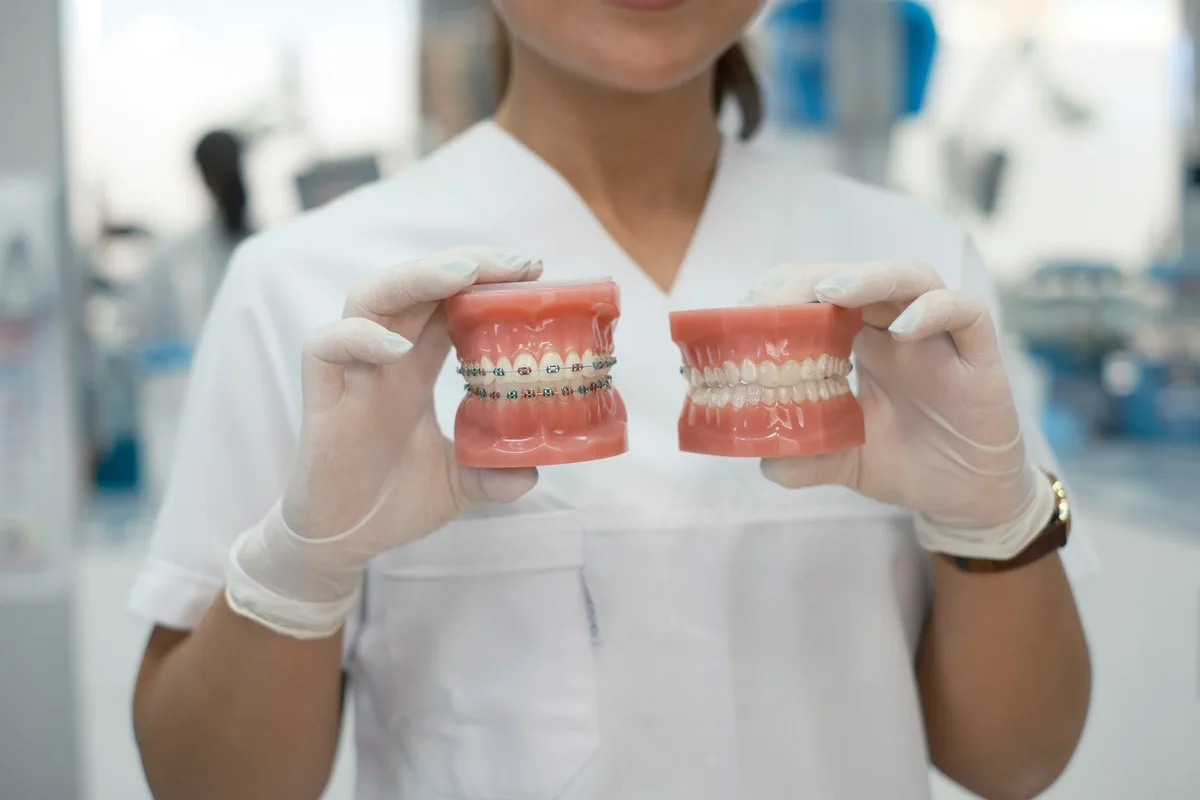
Teaching models showing fixed braces and a clear tray: Enis Yavuz, Unsplash License.
Resized and converted to WebP; displayed with cropping.
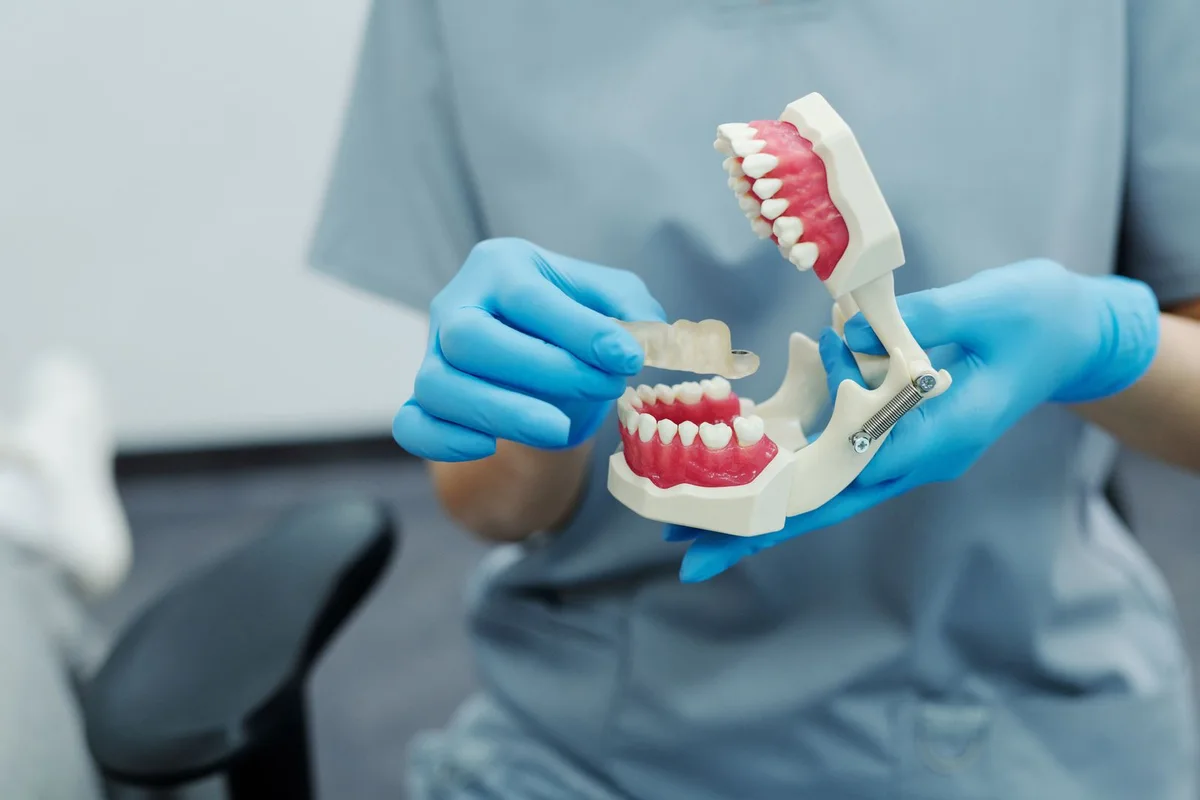
A tray demonstration using a dental model: Cedric Fauntleroy, Pexels License.
Resized and converted to WebP; displayed with cropping.
Ready When You Are
Make the next visit feel easier before your child even walks in.
Schedule pediatric dental care in Stratford for a first visit, cleaning, cavity concern, tongue tie evaluation, orthodontic growth check, or dental emergency.